The rich imagination of the Japanese people embodied in the sound of thunder
What do you imagine when you hear thunder rumbling across the sky in the Japanese summer? In modern times, we understand it as a meteorological phenomenon, but since ancient times, Japanese people have found a special story in the sound of thunder.
"Gorogoro" and "dondokodondoko" - these sounds go beyond mere onomatopoeia to express the deep spirituality of Japanese culture.
The sound of drums echoing in the sky: A beautiful story from Hyogo Prefecture
The legend of "Kuwabara Kuwabara Kinshoji Temple," which has been passed down since ancient times in Hyogo Prefecture, contains this beautiful passage:
Once upon a time, a father and son thunder were beating drums in the sky to make it rain.
The children were very enthusiastic about the thunder. They were beating the drums and making the lightning flash.
"Hey, hey, if you hit him so roughly, it's dangerous," Kaminari's parents scolded, but the young Kaminari wouldn't listen.
"That, that," he said, thump thump thump. The drums were pounding in rhythm, sending down pours of rain here and there.
This story is imbued with a sense of awe towards natural phenomena and the warm-heartedness of the Japanese people, who express this in an approachable way.
Raiko, the Thunder God's Drum: A Cultural Heritage in Japanese Art
Traditional beauty seen in the Wind God and Thunder God paintings
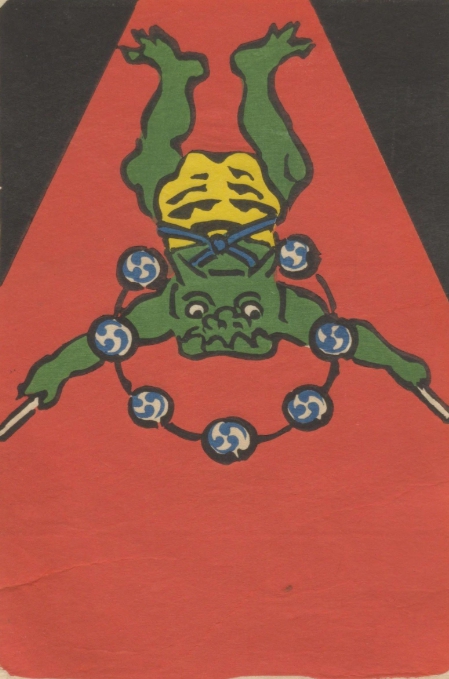
Have you ever seen Tawaraya Sotatsu's famous "Wind God and Thunder God Screen"? The god of thunder depicted there is carrying a drum called a "raiko" on his back.
This drum has been considered the source of thunder. Japanese people have perceived the sound of thunder as "the sound of the drum being struck by the god of thunder," giving this frightening natural phenomenon a familiar character.
The poetic expression "Cloud Drum"
There is also a beautiful expression that refers to thunder as "cloud drums." This phrase evokes the image of a celestial concert, with the sound of drums reverberating among the clouds.
A world of sounds woven together by onomatopoeia
The Japanese language is famous around the world for its wealth of onomatopoeia, and its use of thunder is particularly diverse:
Types of sounds and their expression
- "Rolling" - A deep rumble of thunder echoing from afar
- "Dondoko dondoko" - The powerful sound of drums being struck repeatedly
- "Zazaka" "Zaazaa" - The intense sound of rain falling
- "Shiny" - Lightning flash
These onomatopoeia not only describe sounds, but also have a story behind them.
A view of nature where eight million gods reside
The desire for harmony with nature
In Japan's worldview of "eight million gods," it is believed that gods reside in all natural phenomena. Lightning is one such phenomenon to be feared, but at the same time, it has been affectionately referred to as "Kaminari-sama."
As the honorific "sama" indicates, Japanese people have anthropomorphized natural phenomena and viewed them as beings with which they can communicate.
Links to agricultural culture
Thunder also brought rain, an important blessing for rice cultivation. As the word "lightning" suggests, thunder and rice cultivation are deeply connected, and the thunder god's drum was also a divine instrument that brought fertility.
A culture passed down to the present day
Influence on Japanese drumming
Even in modern Japanese drumming, there are techniques that mimic the sound of thunder. The sound of the drum itself is likened to the sound of thunder, and the performer strikes the drum as if he were the god of thunder in the sky.
Passing on culture to children
The legend of "Thunder coming to take your belly button" was a cultural device used to convey this terrifying natural phenomenon in a way that children could understand.
Summary: The warmth and imagination of Japanese culture
Japan's lightning culture reflects the unique Japanese sensibility of not viewing natural phenomena as simply scientific phenomena, but of finding narrative and humanity in them.
The "dondoko dondoko" sound of the drums is the music of the gods that echoes from the heavens, and at the same time it is a cultural melody that resonates in the hearts of the people.
This rich power of expression and imagination may be the source of the beauty of Japanese culture. The next time you hear the sound of thunder, try listening to the thunder god playing his drums in the sky.
Image source: NDL (National Diet Library) Image Bank
References
- Hyogo Prefectural Museum of History "Hyogo Legend Journey"
- Homemate "Festivals and Traditional Performing Arts: Taiko"
- Wikipedia "Raijin"