Doraemon – Author –
-

Buying Digital Art Prints: A Practical Guide to Hokusai and Ukiyo-e Quality
Digital print quality varies enormously — from excellent museum-scan restorations to pixelated stretched files. What resolution actually means, what source quality matters, and how to buy what looks good on your wall. -
Hokusai in Pop Culture: How the Great Wave Conquered the World
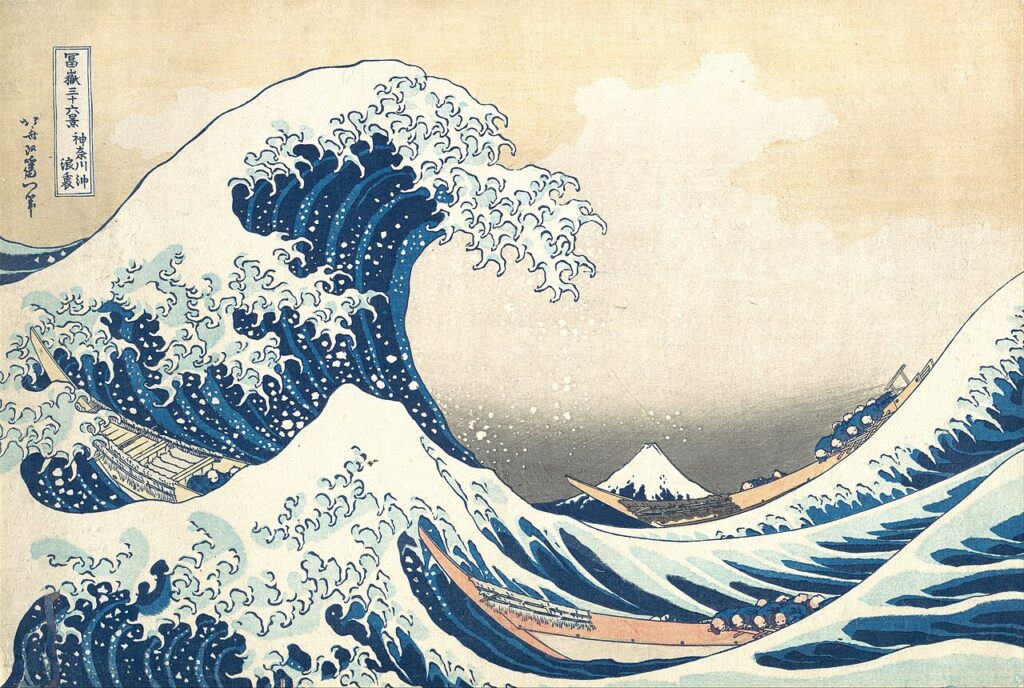
The Great Wave is on mugs, phone cases, tattoos, and the wave emoji. How a 19th-century Edo print became the most reproduced artwork in human history — and what that ubiquity means. -
Lacquerware and Ukiyo-e: One Visual Language, Two Surfaces
Japanese lacquerware and ukiyo-e prints share compositional conventions, seasonal symbolism, and design vocabulary. They developed within the same visual culture — and understanding one enriches the other. -
The Floating World: What Ukiyo Actually Means
Ukiyo began as a Buddhist term for suffering and was deliberately inverted into a philosophy of pleasure. Understanding this semantic shift changes what you understand ukiyo-e to be. -
Hokusai’s Bird and Flower Prints: The Overlooked Kacho-ga Masterworks
Everyone knows Hokusai's waves. Far fewer know his bird and flower prints — kachō-ga that show a different kind of attention: intimate, observational, among the finest in the genre's history. -
Japanese Woodblock Print Color: Pigments, Prussian Blue, and Fading
The Great Wave's iconic blue was a European synthetic pigment that arrived in Japan around 1820. A material history of ukiyo-e color — what changed, what faded, and what it means for looking at prints. -
Shinto and Japanese Art: The Sacred Natural World in Ukiyo-e
Shinto's understanding of nature as sacred — the kami in mountains, rivers, and ancient trees — shaped Japanese visual culture at its deepest level. Understanding Shinto changes how you see Hokusai. -
Surimono and Japanese Fan Art: The Luxury Tier of Ukiyo-e
Surimono were privately commissioned prints with no commercial cost ceiling — metallic pigments, blind embossing, extraordinary fine carving. The luxury tier of ukiyo-e that most people have never seen. -
Fuji Five Lakes: Sacred Geography and Hokusai’s Mountain Views
The Fuji Five Lakes — Kawaguchiko, Yamanakako, Saiko, Shojiko, Motosuko — gave Hokusai his most compositionally ambitious Fuji images. A guide to the sacred geography at the mountain's base. -
Japanese Landscape Painting: From Ancient Scrolls to Hokusai
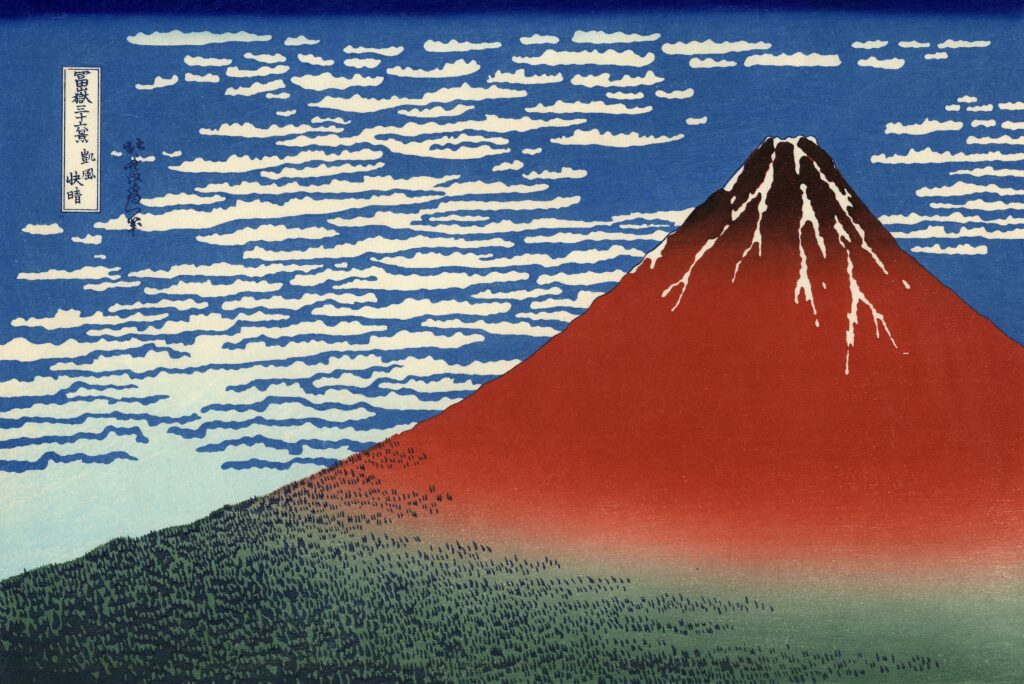
Japanese landscape painting spans a thousand years — from Chinese-influenced ink scrolls through the Kanō school's gold-leaf screens to Hokusai's revolutionary ukiyo-e landscapes. A complete visual history.